

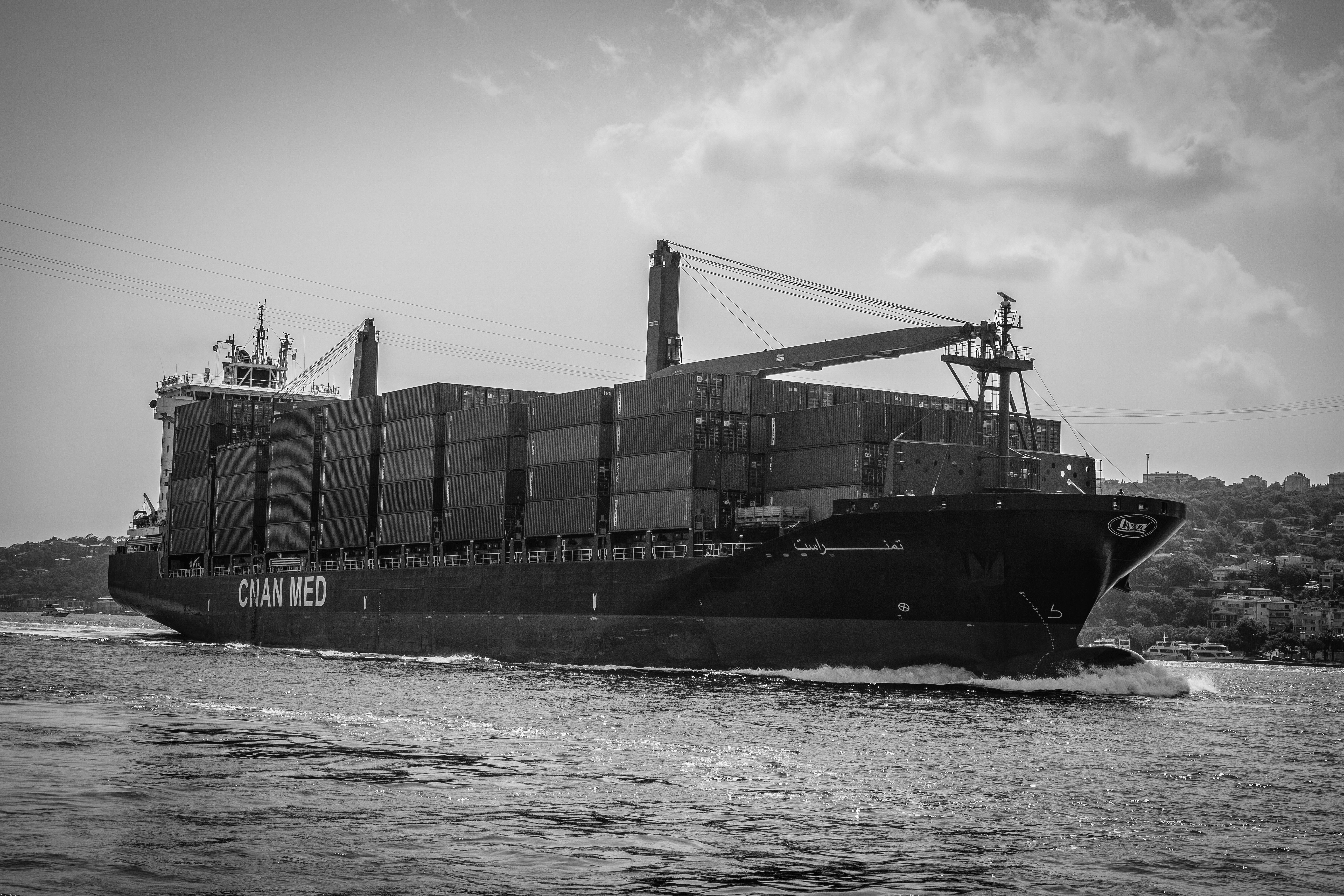
Nearly a third of global crude oil trade, and roughly a fifth of the world's LNG trade, passes through a single 33-kilometer-wide sea corridor: the Strait of Hormuz. When risk rises in this corridor, it isn't an abstract piece of geopolitical news — it has a direct impact on freight rates, transit times, and ultimately on the procurement planning of companies that seemingly have nothing to do with the Persian Gulf.
And that's exactly what's happening right now.
What happened?
- On August 18, Donald Trump rejected an extension of the US-Iran ceasefire signed in June. The agreement, signed on June 17, would have given both sides 60 days to reach a broader deal covering Iran's nuclear program and US sanctions — that deadline has now effectively passed without result. Reports since then indicate Iran is preparing for a "fully offensive" stance after talks stalled; according to a senior Iranian official, units need to be ready to escalate tension in the Strait of Hormuz and the wider region if diplomacy fails.
The risk isn't confined to a single corridor. Houthi activity has also increased around the Bab-el-Mandeb Strait, the other key chokepoint connecting the Red Sea to the Gulf of Aden, further raising the chances of a broader regional escalation.
(Source: myKN – Kuehne+Nagel news portal)
Why is this more than just another geopolitical headline?
It's worth recalling what actually happened the last time this situation truly escalated. During the US-Israel-Iran conflict that broke out in February 2026, 90% of shipping traffic through the strait rerouted, and following Iranian threats that share rose above 95%. The shutdown wasn't total and it wasn't permanent — but it was enough for an estimated half a million containers to get stranded in ports and on waiting vessels, while roughly 20,000 seafarers had their voyages interrupted.
What makes this situation especially risky is that this isn't the only chokepoint through which trade flows between Asia and Europe. When the Red Sea route is also running at limited capacity (close to half of pre-crisis levels) alongside the Strait of Hormuz, there's effectively no convenient alternative — neither via the Suez Canal nor in the Gulf region. This kind of "double squeeze" was what produced the most disrupted logistics environment on the Asia–Middle East–Europe route since the pandemic in spring 2026.
The current development echoes this pattern: throughout 2026, the situation has already swung several times between complete shutdown, partial reopening, and renewed closure — meaning this isn't a single event, but a recurring risk pattern worth planning for on an ongoing basis, rather than just reacting to individual headlines.
2026's rollercoaster in the Strait of Hormuz so far:
| Date | Event |
|---|---|
| Late February 2026 | US-Israeli strikes on Iran; traffic through the strait reroutes above 90%, then above 95% |
| April 8, 2026 | Iran's foreign minister announces the route is "completely free" for commercial vessels |
| April 18-19, 2026 | Iran withdraws the announcement within days; tanker ships are fired upon, the strait is closed again |
| May-June 2026 | Persistently tense situation; the 60-day US-Iran ceasefire is signed on June 17 |
| Early July 2026 | A roughly three-week practical shutdown of shipping traffic |
| July 30, 2026 | The first LNG tanker passes through again; traffic starts picking up |
| August 18, 2026 | Trump rejects an extension of the ceasefire — the starting point of this article |
The pattern is clear: in 2026, the strait didn't just close and reopen once — it kept swinging between complete shutdown and uncertain, limited traffic. This kind of unpredictability is often a bigger business risk than a sustained, foreseeable closure — because you can't prepare for it with a single decision, only through continuous monitoring.
What does this mean in practice?
- Freight rate volatility. A prolonged or repeated closure shows up immediately in oil prices, which in turn feeds through into both sea and land freight rates.
- War-risk insurance surcharges. Insurers react quickly to changes in the threat level for routes touching the region — this shows up directly in shipping costs, even if your own route doesn't directly pass through the strait.
- Longer, less predictable transit times. Rerouting (e.g., via the Cape of Good Hope) can extend shipping times by days, even weeks.
- Secondary effects through energy prices. Movements in oil and LNG prices can also push up the cost of land transport and warehousing, not just the maritime segment.
What's worth thinking through right now?
- Review your route dependencies. If your supply chain touches the Asia-Europe corridor, map out which shipments actually pass through the affected region or neighboring areas.
- Build flexibility into your contracts. Reviewing force majeure and rerouting clauses now — rather than in the middle of an actual shutdown — is far cheaper.
- Plan for longer lead times. For critical materials or seasonal products, it's worth placing orders earlier and building in buffer time.
- Actively track freight-rate and insurance-surcharge trends, not just the big headlines — risk often shows up in surcharges days before an open escalation.
In a situation like this, the biggest risk isn't the event itself, but only starting to plan once the situation is already causing real disruption. If you'd like to think through how exposed your own supply chain is to these risks, get in touch with us — we're happy to help map out the alternatives.
Sources: myKN / Kuehne+Nagel, IEA, U.S. Congressional Research Service, Visual Capitalist, Britannica.